
"French Guyana"
80 article(s) found

Coffee producing area Suriname
Suriname (Surinam) was the first country in South America to grow coffee, and Norway was once a major importer of coffee products. However, the country's output is very small today, and it is mentioned here only for historical reasons.
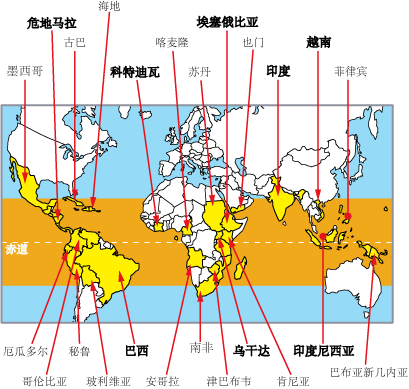
Suriname is the first country in South America to grow coffee. Norway is a major importer of coffee products.
Suriname Suriname (Surinam) is the first country in South America to grow coffee, and Norway was once a major importer of coffee products. However, the country's output is very small today, and it is mentioned here only for historical reasons. The Dutch, who settled in Suriname in 1667, introduced coffee trees from Java in the early 18th century. The first coffee trees were made by the mayor of Asmstedan.
Suriname (Surinam) was the first country in South America to grow coffee, and Norway used to be the country's coffee.
Suriname (Surinam) was the first country in South America to grow coffee, and Norway was once a major importer of coffee products. However, the country's output is very small today, and it is mentioned here only for historical reasons. The Dutch, who settled in Suriname in 1667, introduced coffee trees from Java in the early 18th century. The first batch of coffee trees were given by the mayor of Asmstedan.

Suriname (Surinam) the first country in South America to grow coffee imported from Norway
High-quality coffee beans are refined by water treatment. The coffee beans with less impurities can be obtained by the water washing method, but if the water quality and time are not properly controlled during the fermentation process, the coffee beans will easily be infected with the sour taste of excessive fermentation. and dry beans also need to pay attention to timely re-inspection to prevent coffee beans from being contaminated by wet ground and sundries. Processed
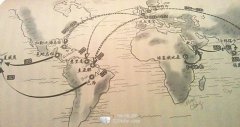
The spread of coffee history
Ethiopia (7th-9th century) Arab States (Yemen) Nataka, India (1600) Ceylon (1658 Netherlands) Java (16901696 Netherlands) Amsterdam (Netherlands 1706-1710) Versailles (France around 1713) and Suriname Caribbean island countries and Guyana and Brazil Guatemala Hawaii (United States 1892 and 1825) Arab States Yemeni French Bourbon 1
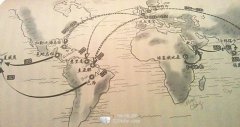
The spread History of Coffee Culture Fine Coffee in the World
Ethiopia (7th-9th century) Arab States (Yemen) Nataka, India (1600) Ceylon (1658 Netherlands) Java (16901696 Netherlands) Amsterdam (Netherlands 1706-1710) Versailles (France around 1713) and Suriname Caribbean island countries and Guyana and Brazil Guatemala Hawaii (United States 1892 and 1825) Arab States Yemeni French Bourbon 1
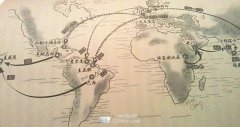
Introduction to Coffee the spread History of Coffee
Ethiopia (7th-9th century) Arab States (Yemen) Nataka, India (1600) Ceylon (1658 Netherlands) Java (16901696 Netherlands) Amsterdam (Netherlands 1706-1710) Versailles (France around 1713) and Suriname Caribbean island countries and Guyana and Brazil Guatemala Hawaii (United States 1892 and 1825) Arab States Yemeni French Bourbon 1
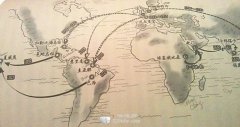
The spread History of Fine Coffee basic knowledge Coffee
Ethiopia (7th-9th century) Arab States (Yemen) Nataka, India (1600) Ceylon (1658 Netherlands) Java (16901696 Netherlands) Amsterdam (Netherlands 1706-1710) Versailles (France around 1713) and Suriname Caribbean island countries and Guyana and Brazil Guatemala Hawaii (United States 1892 and 1825) Arab States Yemeni French Bourbon 1

The Development of Coffee Historical Communication Historical Coffee Culture
Ethiopia (7th-9th century) Arab States (Yemen) Nataka, India (1600) Ceylon (1658 Netherlands) Java (16901696 Netherlands) Amsterdam (Netherlands 1706-1710) Versailles (France around 1713) and Suriname Caribbean island countries and Guyana and Brazil Guatemala Hawaii (United States 1892 and 1825) Arab States Yemen French Bourbon Island 19

Introduction to the characteristics of Brazilian boutique coffee flavor manor with mellow taste
The Portuguese expedition established a colony in Pakistan in the 1630s. The Governor was appointed in 1549. The entire colony was then United along the Atlantic coast under Portuguese rule. The French invaded in 1555, occupied the equivalent of present-day Rio de Janeiro, and intended to set up a French colonial stronghold in South America. However, because the French were unable to attract colonists from Europe,

Description of the Flavor of Coffee beans in Queen's Manor of Brazil
Flavor description of coffee beans in Queen's Manor of Brazil since coffee trees were introduced from French Guiana (Guyana) in 1720, coffee production has gradually become a science. Before 1990, the Brazilian government carried out strict monitoring of the coffee industry, with both strict intervention and price protection measures, and the state has been implementing minimum price protection measures for farmers.

Description of Flavor of Fine Brazilian Coffee beans introduction of Grinding scale in Manor Taste production area
Fine Brazilian coffee bean flavor description manor taste area grinding scale introduction since coffee trees were introduced from French Guiana (Guyana) in 1720, coffee production has gradually become a science. Before 1990, the Brazilian government carried out strict monitoring of the coffee industry, with both strict intervention and price protection measures, and the state has been implementing minimum price protection measures for farmers.

How do you drink Suriname coffee? Does Suriname produce coffee? History of coffee cultivation in Suriname
Coffee workshop (Wechat official account cafe_style) Suriname is located in the northern part of South America, with its name derived from the indigenous people, French Guiana to the east, Brazil to the south, Guyana to the west and the Atlantic Ocean to the north, with a tropical rain forest climate. The land area is about 164000 square kilometers, which is slightly smaller than that of Henan Province in China. To the north is the coast.

History of the development of coffee beans in Brazil, a big coffee country in the world, the influence of Brazilian coffee characteristics on world coffee production
The charm of Brazilian coffee is not as good as the unrestrained, warm and earth-shaking samba dance and the carnival that cannot stir up the tip of the tongue, but Brazilian coffee is thoroughly integrated into the blood of Brazilians who are happy to know their fate, and it touches the heartstrings of coffee lovers with its colorful flavor. it has a long aftertaste. An interesting historical story of Brazilian coffee was originally on more than 8.5 million square kilometers of land in Brazil.

History of Brazilian coffee beans History of Brazilian Arabica coffee beans
Pay close attention to the coffee review (Weixin Official Accounts vdailycom ) and find that the beautiful coffee shop opens its own small shop. Brazil is the largest coffee producer in the world. The quantity is huge, but the overall standard is not high. There is not much high-quality coffee. Brazilian coffee is mostly used to mix comprehensive coffee. In 1720, the French brought coffee from Guyane française to Brazil, which later got some from Guyana

Introduction to the producing area of Brazilian Bobang Coffee Bean species and Flavor description
Brazilian Bourbon Coffee Bean species Flavor description method Variety production area introduction since the introduction of coffee trees from French Guiana (Guyana) in 1720, coffee production has gradually become a science. Before 1990, the Brazilian government carried out strict monitoring of the coffee industry, including strict intervention and price protection measures, and the state has been implementing minimum price protection measures for farmers.

Brazilian Coffee Manor and description of its Taste and Flavor introduction of varieties produced in planting environment
Brazilian Coffee Manor and Flavor description growing Environment Variety introduction since the introduction of coffee trees from French Guiana (Guyana) in 1720, coffee production has gradually become a science. Before 1990, the Brazilian government carried out strict monitoring of the coffee industry, with both strict intervention and price protection measures, and the state has been implementing minimum price protection measures for farmers.

The characteristics and Origin of the passionate Brazilian Santos Coffee
Santos coffee (Santos Coffee) is mainly produced in Sao Paulo, Brazil. This kind of coffee acid, sweet and bitter is neutral, moderate concentration, with moderate sour taste, elegant and special taste, is the best blending beans, known as the strong coffee, but the taste is also good. Brazil is located in South America, about 15 degrees south latitude. Coffee culture in Brazil began in 1727 and sprang up in the north of Brazil.

Flavor description of South Minas Coffee Bean in Brazil
Flavor description of South Minas Coffee beans in Brazil since the introduction of coffee trees from French Guiana (Guyana) in 1720, coffee production has gradually become a science. Before 1990, the Brazilian government carried out strict monitoring of the coffee industry, with both strict intervention and price protection measures, and the state has been implementing minimum price protection measures for farmers, resulting in
How about Brazilian Santos Coffee? Santos Coffee Story the characteristics of Brazilian yellow bourbon coffee beans
For more information on coffee beans, please follow the coffee workshop (Wechat official account cafe_style) Arabica coffee in Brazil is called Bourbon, after it appeared on the island of Bourbon (now known as Reunion). Santos Coffee is a smaller and curly bean derived from the Yemeni mocha. Use only the top coffee harvested in the first two times